Vision changes can feel unsettling, particularly when daily activities such as reading, cooking, or driving at night become more difficult. Cataracts are a common age-related condition where the natural lens of the eye becomes cloudy, gradually reducing clarity. For many, cataract surgery becomes part of restoring clearer vision. Understanding what happens before, during, and after the procedure can ease concerns and help patients and their families prepare.
This blog post explains each stage of cataract surgery in plain, practical language. From the first referral to post-surgery recovery, here’s what you can expect.

Recognising When It’s Time to Consider Cataract Surgery
Cataracts usually develop slowly, meaning many people adapt to gradual vision loss without realising how much it affects their quality of life. Surgery is generally considered when cataracts interfere with everyday activities.
Common signs that cataract surgery might be discussed include:
- Blurred or cloudy vision that doesn’t improve with glasses.
- Difficulty seeing in dim light or when there is glare, such as headlights at night.
- Struggling with tasks like reading, recognising faces, or watching television.
Patients are often referred to a specialist ophthalmologist by their GP or optometrist. This referral allows for a thorough eye assessment and a discussion of whether surgery is an appropriate option.
Your First Appointment with a Specialist Ophthalmologist
The first visit after referral is an important step. At this stage, patients meet with an ophthalmologist, who is a medical doctor specialising in surgical eye care. The consultation focuses on confirming the diagnosis and outlining possible treatment.
The appointment usually involves:
- A detailed review of medical and eye health history.
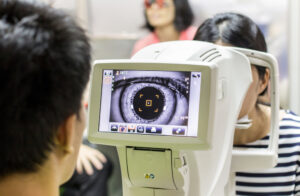
- Diagnostic tests such as scans, eye pressure checks, and eye measurements.
- A conversation about cataract surgery and the role of intraocular lenses.
Patients are encouraged to bring a list of medications, any relevant health information, and a family member or carer for support. This helps make the consultation as clear and stress-free as possible.
Preparing for Cataract Surgery: What Patients Should Know
Preparation for surgery is straightforward but requires attention to detail. In the days before the procedure, patients are generally given clear instructions to follow.
Preparation steps may include:
- Using prescribed eye drops to reduce the risk of infection or inflammation.
- Adjusting certain medications in consultation with a GP or specialist.
- Arranging for someone to accompany them to and from the surgery centre.
Depending on the type of anaesthetic used, fasting before the procedure may also be required. Proper preparation can help the day of surgery run smoothly.
What Happens on the Day of Cataract Surgery
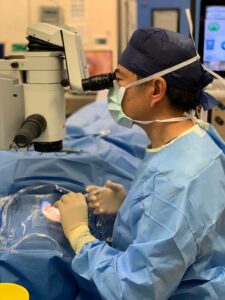
Cataract surgery is often a short procedure, usually completed in less than an hour. Patients are typically admitted to a day surgery unit and go home the same day.
On arrival, patients are prepared for surgery with:
- Dilating eye drops to widen the pupil.
- A local anaesthetic, usually as drops or an injection around the eye, to minimise discomfort.
- A mild sedative in some cases to help with relaxation.
The cloudy lens is carefully removed during the surgery and replaced with a clear intraocular lens (IOL). The incision made is very small and is usually self-sealing, which means stitches are not always required. The procedure is painless for most people, though there may be awareness of lights and movement.
Understanding the Role of Intraocular Lenses (IOLs)
An essential part of cataract surgery is replacing the cloudy natural lens with an artificial intraocular lens. These lenses are designed to restore clearer vision.
Different types of IOLs are available:
- Monofocal lenses: Provide clear vision at a set distance, often for distance vision. Glasses may still be needed for near tasks.
- Multifocal lenses: Designed to provide vision at multiple distances, reducing the need for glasses in some situations.
- Toric lenses: Used to correct astigmatism, a common condition where the cornea has an irregular shape.
The choice of IOL is usually discussed during pre-surgery consultations, and consideration is given to lifestyle needs, eye health, and personal preferences.
Immediate Recovery After Cataract Surgery
Recovery starts as soon as the procedure is complete. Patients are usually monitored briefly in a recovery area before going home the same day.
In the first hours and days after surgery, it is normal to experience:
- Mild irritation or a gritty feeling in the operated eye.
- Sensitivity to light and blurred vision that gradually improves.
- The need to wear an eye shield while sleeping to protect the eye.
Special eye drops are prescribed to support healing and reduce the chance of infection. Patients are advised to avoid rubbing the eye and to rest for the remainder of the day.
Long-Term Healing & Adjustments to Clearer Vision
Full healing takes several weeks, though most people notice improved vision within days. Regular follow-up appointments with the ophthalmologist help track recovery and identify any issues early.
During the recovery period, patients are generally advised to:
- Avoid strenuous activities or heavy lifting for at least a week.
- Keep water, dust, or dirt out of the eye.
- Use all prescribed drops exactly as directed.
Once vision has stabilised, glasses may need to be updated a few weeks after surgery. Many people find that colours appear brighter, and tasks that have become difficult, such as reading or night driving, have become easier to manage.
Cataract Surgery as a Step Towards Better Quality of Life
The decision to proceed with cataract surgery is personal, but it represents an important step towards regaining independence and confidence in daily life for many.
Benefits commonly reported by patients include:
- Reduced reliance on others for everyday tasks.
- Safer mobility, especially in low light.
- Renewed enjoyment of reading, hobbies, and social activities.
Family members and carers often notice the positive impact of cataract surgery, making it a decision that can improve the lives of patients and those around them.
Take the Next Step
At Pacific Eye Clinic, we understand that deciding on cataract surgery can feel daunting. Our ophthalmology team provides dedicated care for patients considering cataract surgery on the Gold Coast, from initial referral to post-operative reviews. If you or a loved one is beginning this journey, we encourage you to reach out and learn more about what to expect.
Contact us via our website or give us a call to find out more about cataract care or to arrange an appointment.
Author

Dr Marc Wei
Dr. Marc Wei is the principal specialist laser and cataract surgeon at Pacific Eye Clinic in Southport on the Gold Coast. He has 20 years of trusted experience in advanced laser cataract surgery and has completed more than 15,000 procedures over the course of his career.