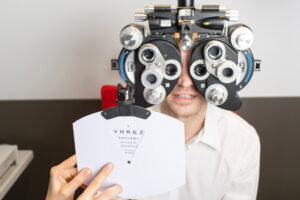
Macular degeneration affects the macula, the part of the retina responsible for detailed central vision. It can make reading, recognising faces and driving more difficult, while side vision usually remains. Clear expectations reduce stress, so this guide explains what typically happens at an appointment for macular degeneration on the Gold Coast at a clinic like Pacific Eye Clinic. It is general information only. Always follow your clinician’s advice for your eyes.

Understanding Macular Degeneration in Plain Language
The macula is a small area at the back of the eye that provides sharp, colour-rich vision. In age related macular degeneration (AMD), this tissue changes over time. Early AMD may cause no obvious symptoms, yet small deposits called drusen can be seen on retinal photos. As changes progress, straight lines can look wavy, a smudge can appear in the centre and colours can seem dull. Side vision tends to remain, which is why moving around a room can still be fine even when reading becomes harder. AMD is more common after 50, so routine eye checks matter even when vision seems normal.
Early Signs to Watch For
AMD can be subtle at first. Book a check if you notice any of the following:
- Straight edges on tiles, blinds or door frames that look bent
- A central smudge or blank spot when reading or watching TV
- Colours that seem washed out compared with usual
- Needing more light for close work, with slower adjustment moving from bright to dim
- Night glare or halos that make driving less comfortable
A sudden new central distortion or blur needs same-day review. Early assessment helps protect sight.
Dry vs Wet AMD: Why the Difference Matters
AMD presents in two main forms. Dry AMD progresses gradually as the macula thins and drusen build. Vision changes often happen slowly. Wet AMD occurs when fragile new blood vessels grow under the macula and leak. Vision can change faster. Wet AMD is treatable, so timely diagnosis is important. Your clinician will explain which type you have, how it relates to your tests and what that means for day-to-day tasks like reading and driving. If you have dry AMD, you will usually be placed on a structured monitoring plan. If wet AMD is detected, treatment can start after informed consent.
What to Bring & How to Prepare
A little preparation makes the appointment smoother:
- Current glasses and a list of medicines or supplements
- Any previous eye records if you have them
- Notes on when symptoms began and which eye feels worse
- A support person or transport, because pupil dilation can make driving unsafe for a few hours
- No eye makeup on the day, and comfortable clothing so imaging equipment can position you easily
- If you use an Amsler grid at home, bring notes on any changes you have noticed
Write down questions for your clinician so you leave with a clear plan.
Tests You Can Expect at the Clinic
Assessment is detailed but comfortable, and most steps are non-contact.
- Vision and refraction: Checks clarity at distance and near to separate optical blur from retinal change
- Dilated eye exam: Drops widen the pupils so the macula and optic nerve can be examined carefully
- Retinal photographs: High-resolution images document the macula and any drusen for comparison over time
- OCT scan: Cross-section imaging shows the layers of the retina and helps detect fluid linked with wet AMD
- Function checks: An Amsler grid assesses distortion. Other imaging can be added if your clinician needs more detail
These results set a baseline so future visits can detect change early.
Treatment Pathways & Monitoring
Care depends on type and stage. With dry AMD, the focus is regular monitoring, healthy lifestyle and, where appropriate, clinician-recommended supplements based on large studies. Not everyone benefits from supplements, so use them only if your eye care professional advises them. With wet AMD, an ophthalmologist may offer anti-VEGF treatment to reduce leakage and stabilise the macula. Many patients need a loading phase followed by maintenance visits at set intervals. Your plan can also address coexisting issues like cataract, glaucoma or dry eye, since these can influence comfort and clarity even when AMD is stable. Your clinician will outline expected benefits, visit frequency and realistic outcomes for your eyes.
Same-Day Aftercare & When to Call
After dilation, near vision will blur and lights can feel bright for a few hours. Sunglasses help outdoors. If you receive an injection on the day, mild scratchiness or watering is common for 24 to 48 hours. Follow drop instructions exactly. Avoid rubbing, dusty environments, heavy exercise and swimming until your clinician confirms it is safe. Seek urgent review if you notice increasing pain, a sudden drop in vision, pus-like discharge or worsening redness. If unsure, call the clinic. Early review is safer than waiting.
Living Well with AMD: Practical Supports & Follow-up
Small changes can ease daily tasks while clinical care protects sight. Improve lighting with bright, even lamps placed over your shoulder. Increase text size on phones, tablets and e-readers. Switch on high-contrast display settings and use bold fonts for clarity. Simple magnifiers or electronic aids can help with menus and mail. Mark edges and stove settings with high-contrast stickers if controls are hard to see. Ask about low vision services that provide training and tailored tools.
Follow-up timing varies with stage. Dry AMD is often reviewed every few months. Wet AMD follow-up is set by the ophthalmologist and can be more frequent during treatment phases. If you notice new distortion or a central blur between visits, contact the clinic the same day.
Book Pacific Eye Clinic for Macular Degeneration Care on the Gold Coast
Pacific Eye Clinic provide careful assessment and clear guidance for macular degeneration on the Gold Coast. From baseline testing and OCT scans to ongoing reviews and coordinated treatment, our team supports you with evidence-based care and practical advice. If you are noticing distortion, a central blur or changes with reading, book a macular review today. Visit our website to arrange an appointment and get a plan that suits your eyes.
Author

Dr Marc Wei
Dr. Marc Wei is the principal specialist laser and cataract surgeon at Pacific Eye Clinic in Southport on the Gold Coast. He has 20 years of trusted experience in advanced laser cataract surgery and has completed more than 15,000 procedures over the course of his career.