Vision plays a central role in how we experience the world, from reading and driving to recognising familiar faces. As we age, one condition that often affects this central part of our sight is macular degeneration. It impacts the macula—the area responsible for sharp, straight-ahead vision. Understanding who is most likely to develop macular degeneration can help individuals make informed decisions about their eye health. Whether you’ve recently noticed changes in your vision or have a family history of eye disease, recognising these macular degeneration risk factors may help guide the timing of eye checks and ongoing monitoring. Here’s what to be aware of and why seeing an ophthalmologist on the Gold Coast may be considered if concerns arise.

1. Ageing Eyes: Why Advancing Age Is the Most Significant Risk Factor
One of the most widely recognised factors linked to macular degeneration is age. Most people diagnosed with age-related macular degeneration (AMD) are over 50, and the likelihood increases over time.
- Retinal cells can deteriorate with age, affecting their function and structure.
- Accumulated waste products, or drusen, may form beneath the retina and impact vision.
- The gradual loss of central vision can interfere with reading, driving, and recognising faces.
While ageing itself cannot be modified, regular visits to an eye clinic may help track any developing changes, especially if symptoms such as blurring or distortion appear in the central field of vision.
2. Genetics & Family History: Can Macular Degeneration Run in Families?
For many people, genetics play a part in determining risk. If a close relative has macular degeneration, it may indicate a heightened likelihood of developing the condition.
- Specific genetic variations have been linked to inflammation and immune responses in the eye.
- A family history can provide useful information for determining how frequently eye checks should be considered.
- Those with a genetic predisposition might benefit from closer observation of early symptoms.
Knowing whether there is a family pattern of AMD may help guide discussions with an eye clinic on the Gold Coast about appropriate next steps or screening intervals.
3. Lifestyle Choices & Smoking: How Tobacco Use Affects Retinal Health
Among modifiable factors, smoking is one of the most closely linked to macular degeneration risk. Tobacco use has been found to impact the blood vessels and oxygen supply to retinal tissue.
- Smoking contributes to oxidative stress, which may damage cells in the macula.
- Chemicals in tobacco can compromise the protective barrier within the retina.
- Smokers have been shown in some studies to be more likely to report AMD compared to non-smokers.
People who currently smoke or have done so in the past may consider raising this during eye consultations, as it could influence ongoing monitoring recommendations.
4. Diet & Nutrition: The Role of Antioxidants in Protecting Vision
What we eat may influence many aspects of our health, including the condition of our eyes. Some research has explored how nutrients such as lutein, zeaxanthin, and omega-3 fatty acids interact with retinal cells.
- A diet high in dark leafy greens, fish, and brightly coloured fruits is associated with nutrients that support eye function.
- Low intake of antioxidants may be linked to increased vulnerability to oxidative damage.
- Excess consumption of saturated fats and processed foods has been suggested in studies to be a potential risk factor.
Those at risk of macular degeneration may find it helpful to speak with a healthcare provider or nutritionist about incorporating more of these supportive foods into their meals.
5. UV Exposure & Eye Damage: Why Protection Matters
Although sun exposure alone isn’t the cause of macular degeneration, some evidence suggests that prolonged exposure to ultraviolet (UV) light may affect retinal health over time.
- UV and blue light can contribute to light-induced damage in retinal pigment cells.
- Long-term sunlight exposure without protection might accelerate changes in the macula.
- Protective eyewear that filters UV rays can help reduce cumulative exposure.
Incorporating sunglasses and broad-brimmed hats outdoors may support overall eye comfort and reduce glare, especially in bright environments.
6. Underlying Health Conditions: Cardiovascular Disease & Vision Loss
A person’s general health may influence their susceptibility to eye conditions. Vascular health, in particular, appears to be a factor in the development of macular degeneration.
- Elevated blood pressure can affect the small vessels that supply the retina.
- High cholesterol and triglycerides may contribute to the accumulation of drusen.
- Conditions such as diabetes have also been associated with changes in retinal structure and function.
Routine management of cardiovascular risk factors and regular eye examinations can provide a broader picture of health, especially when vision concerns arise.
7. Eye Colour & Risk Sensitivity: What Your Iris Might Reveal
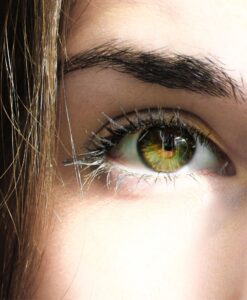
Though perhaps less commonly discussed, eye colour may also affect AMD risk. Some studies have explored how melanin levels in the iris relate to light sensitivity and potential damage.
- Individuals with lighter-coloured eyes (blue, green, grey) may allow more light to reach the retina.
- Increased light exposure can contribute to cumulative stress on retinal tissues.
- Melanin in darker irises provides more natural filtration of UV and visible light.
For those with fair eyes, using UV-blocking sunglasses might be a useful way to limit unnecessary exposure, especially when outdoors frequently or in bright conditions.
Recognising the Early Signs: When to See an Ophthalmologist on the Gold Coast
Macular degeneration often begins subtly, and early signs may be easy to dismiss. Recognising these indicators and discussing them with an ophthalmologist can support early intervention.
- Straight lines may appear wavy, or areas of central vision may become dim or blurry.
- Reading may become more difficult, especially in low light.
- Dark or empty areas may appear in the centre of vision.
These symptoms are worth discussing with an ophthalmologist, particularly if there’s a family history of eye disease or other risk factors. Optical coherence tomography (OCT) and visual acuity assessments are often used to examine the retina in more detail.
Discuss Your Eye Health with Our Team
Understanding the risk factors for macular degeneration allows individuals to take practical steps in monitoring their vision and seeking guidance when needed. While no strategy can eliminate the possibility of developing AMD, being informed supports awareness and a timely response to any changes that arise.
At Pacific Eye Care, our team offers macular degeneration treatment on the Gold Coast that is tailored to your needs. Whether you’re looking to monitor an existing condition or learn more about your eye health, visit our eye clinic on the Gold Coast today.
Author

Dr Marc Wei
Dr. Marc Wei is the principal specialist laser and cataract surgeon at Pacific Eye Clinic in Southport on the Gold Coast. He has 20 years of trusted experience in advanced laser cataract surgery and has completed more than 15,000 procedures over the course of his career.